
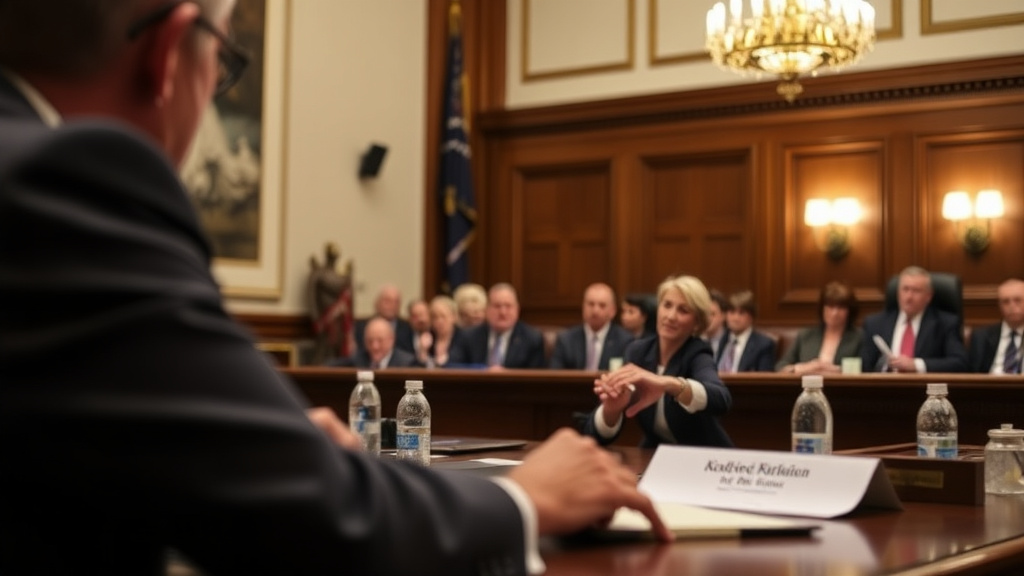
As environmental rules face mounting scrutiny, a Senate committee has launched a comprehensive inquiry into how business lobbying shapes critical policy decisions. The inquiry examines substantial sums invested by business associations to influence laws governing climate change, pollution standards, and conservation efforts. This investigation poses pressing questions about the relationship between business interests and public welfare, possibly revealing the mechanisms through which business influence may undermine environmental protections. The findings could reshape how legislators address regulatory oversight and corporate accountability.
Business Advocacy Expenditures and Environmental Regulations
The Senate committee’s examination shows staggering monetary investments by corporations working to affect environmental policy outcomes. Recent data suggests that major industries collectively spent over $2.6 billion on advocacy work in the last 10 years, with a considerable amount allocated to environmental plus energy standards. These spending levels represent deliberate outlays designed to direct policy focus, slow adoption of more stringent requirements, and support business-friendly readings of existing environmental laws. The extent of these outlays emphasizes the substantial resources corporations allocate to political influence.
Examining the connection between lobbying expenditures and legislative results is critical for evaluating democratic oversight. The committee’s analysis shows correlations between higher lobbying expenditures and documented delays in environmental regulation enforcement. Notably, sectors with the most lobbying spending repeatedly obtained advantageous amendments to proposed legislation or successfully stopped measures threatening their operational interests. This phenomenon prompts critical questions about whether environmental policies serve genuine public health needs or chiefly serve business profitability goals, demanding comprehensive reform of lobbying disclosure rules.
Primary Industries Being Examined
The investigation specifically targets industries with the most substantial environmental impact and associated lobbying expenditures. Oil and gas firms, chemical manufacturers, agriculture conglomerates, and mining companies represent the primary focus of the committee’s examination. These sectors jointly employ numerous lobbyists and maintain extensive networks within legislative branches. The committee aims to document how these organizations coordinate messaging, fund advocacy campaigns, and leverage political connections to shape environmental decisions processes at state and federal levels.
Each industry sector uses different lobbying strategies adapted for their particular regulatory challenges and commercial goals. Energy companies prioritize climate policy and emissions standards, while chemical manufacturers focus on pollution control regulations. Agricultural interests focus on water quality and pesticide regulations, whereas mining companies emphasize environmental impact assessment procedures. The variety of these approaches demonstrates comprehensive grasp of political systems and regulatory frameworks. The committee’s investigation seeks to expose these collaborative efforts and their cumulative effect on environmental policy development.
- Fossil fuel companies spending millions annually on climate-related lobbying efforts
- Chemical manufacturers influencing pollution control and safety standards nationwide
- Agricultural sector funding campaigns against water protection and pesticide use limitations
- Mining operations lobbying environmental impact assessment and reclamation standards
- Utilities companies financing campaigns opposing clean energy requirements
Senate Committee Results and Documentation
The Senate committee’s initial review has uncovered substantial evidence of corporate influence on environmental policy decisions. Researchers identified over $500 million in advocacy spending directed toward environmental legislation over the past five years. The committee found that major fossil fuel companies, chemical manufacturers, and manufacturing firms strategically coordinated their advocacy efforts to weaken proposed environmental protections. These results indicate a systematic pattern of pressure that may have significantly altered the direction of environmental regulation at both federal and state levels.
Testimony from previous agency staff exposed how industry advocates obtained unprecedented access to legislative procedures. Committee members received testimony of industry representatives attending private sessions with agency officials, substantially altering policy wording before public review. The investigation discovered written communications demonstrating close coordination between corporate interests and legislative staff responsible for drafting environmental legislation. These revelations have sparked pushes for stronger accountability standards and improved ethics safeguards within public institutions.
Documentation of Manipulation Strategies
The committee’s analysis revealed several sophisticated tactics employed by industry representatives to shape environmental policy decisions outcomes. Business organizations deployed shell groups and think tanks to increase their message while hiding direct business involvement. They provided funding for academic research that questioned environmental policy need and economic feasibility. Additionally, corporate entities leveraged campaign contributions and legislative relationships to establish relationships with important legislative committee members. These layered tactics established a complex web of sway that frequently stayed invisible to public examination and environmental advocates.
Evidence on record submitted to the committee included internal corporate communications outlining specific policy objectives and allocated budgets for promotional initiatives. Financial records traced substantial sums flowing through multiple intermediary organizations to fund lobbyists, consultants, and public relations firms. The committee uncovered detailed lobbying plans focusing on particular members of Congress recognized for their stance on environmental matters. Notably, the investigation identified proof of aligned communications among various industry groups, suggesting a coordinated approach to resist tougher environmental rules and postpone rollout schedules.
- Direct financial donations to environmental regulation officials and decision-makers
- Supporting academic research challenging environmental regulation viability and necessity
- Establishing shell groups to conceal business participation in lobbying efforts
- Engaging professional advocates with existing connections within government bodies
- Launching grassroots campaigns showcasing staff and corporate representatives
Recommended Changes and Regulatory Measures
In reaction to the committee’s findings, lawmakers are advancing several broad-based reform proposals designed to limit substantial corporate influence on environmental policy. These initiatives aim to strengthen regulatory frameworks while preserving constructive dialogue between industry stakeholders and government officials. Key proposals encompass enhanced disclosure requirements for lobbying expenditures, stricter revolving-door provisions restricting post-government employment in related industries, and greater investment for independent environmental research. Bipartisan support for certain measures suggests potential legislative momentum in the coming months.
The suggested changes constitute a substantial movement toward emphasizing ecological safeguards over business priorities in policy formulation. Advocates contend that open advocacy procedures and responsibility frameworks will strengthen faith in the oversight system. practical obstacles continue to be considerable, particularly regarding implementation systems and establishing clear limits between proper representation and improper sway. However, momentum continues building among environmental groups, wellness-focused groups, and change-oriented policymakers committed to fundamental transformation.
Transparency and Accountability Measures
Public accountability underpins of suggested legislative measures intended to reducing corporate lobbying’s disproportionate impact on environmental policymaking. The committee recommends compulsory instant documentation of all lobbying contacts with government agencies, including comprehensive documentation of meetings, exchanges, and spending. These measures would develop an open-access database permitting citizens, media professionals, and nonprofit organizations to monitor corporate influence attempts. Enhanced transparency could substantially reshape the terrain of environmental policy by revealing long-obscured relationships between industry representatives and government officials.
Accountability frameworks complement openness programs by creating penalties for breaches and improper conduct. Proposed legislation contains significant fines for inaccurate disclosures, undisclosed conflicts of interest, and inappropriate pressure campaigns directed at environmental agencies. Independent oversight bodies would monitor compliance and investigate complaints from the public and watchdog organizations. These enforcement structures seek to establish strong safeguards against unethical lobbying practices while safeguarding legitimate business participation in the regulatory process through proper channels.
- Mandatory immediate reporting of all lobbying contacts with government bodies.
- Public database tracking corporate influence attempts and financial expenditures transparently.
- Substantial penalties for inaccurate disclosures and undisclosed conflicts of interest breaches.
- Autonomous watchdog agencies overseeing compliance and examining public complaints.
- Restrictions on revolving-door practices between industry and government positions.
